Building on the legacy of previous generations, BactoScan™ 5 enables laboratories to analyze bacteria in raw milk more efficiently and with an unprecedented level of safety, making it easier than ever before to improve food safety and ensure milk quality.
Value
Safe and efficient milk bacteria analyzer at a low cost of ownership, enabled by improved operational efficiency, reduced operator steps and less handling of reagents.
Type sample
Raw milk from cow, goat, sheep, and buffalo milk
Parameters
Individual Bacteria Count (IBC/ml)
Boost your productivity
Minimize time spent on reagent handling and reduce the use of chemicals and waste at a lower cost of ownership. BactoScan™ 5 helps you analyze bacteria in raw milk more efficiently and with an unprecedented level of safety. Ultimately, leading to a better business.
Less hassle. More results. Better business.
The BactoScan™ 5, milk bacteria analyzer, exploits advances in instrument hardware and the latest in software and networking connectivity to achieve new levels of productivity in raw milk analysis. With a capacity to analyze between 65 and 200 milk samples per hour, BactoScan 5 ensures a high throughput of milk samples, freeing up operator time while ensuring fast response to dairies and farmers.
BactoScan 5 enables safer and more cost-efficient screening of raw milk for improved food safety and
milk quality assurance. Benefit from superior instrument uptime, flexible capacity and fewer
operator steps for an optimised workflow. At the same time, BactoScan 5 reduces human error and time
spent on reagent preparation, maintenance, and cleaning while responsibly lowering the use of
chemicals and waste.
Accuracy in 4 steps
BactoScan 5 processes a sample in 4 steps.
The sample is stirred and pumped into a tube and carefully sub-sampled.
The sample is dosed into an incubation wheel together with staining solution and enzyme for
staining and homogenization.
The stained sample is passed through the flow cell and excited by a green laser. A lens and
optical filter pick up the signals emitted by passing bacteria.
Results are sent to your LIMS via FossIntegrator™. To ensure optimal results, automatic cleaning
is initiated between each sample.
Bacteria under control. Milk quality on the rise
Milk quality today has improved remarkably since the 1980’s. In the diagram above, we clearly see
that the amount of milk samples with low bacteria content has increased over the past decades. This
change suggests that significant improvements, particularly in terms of farm hygiene, have
contributed to the improved quality and safety of milk.
These improvements and the resulting high quality of milk we see today has been enabled by
cost-efficient technology such as BactoScan™, allowing analysis of large numbers of samples, which
was the basis for including bacteria as a milk payment parameter. That way, dairies could
financially incentivize milk producers to produce high quality milk.
Always stable, high uptime with a connected service solution
With BactoScan™ 5 you can benefit from FOSS IQX™ software solutions that allow you to boost
productivity and evolve your laboratory operations. Automatic backup and reporting ensure that the
data is safe, traceable and accessible from anywhere. Log in to your PC to check results, monitor
instrument performance and get access to reports.
FOSS IQX™
A native SaaS complement to your new BactoScanTM 5. FOSS IQX helps you make informed decision for
improving quality control, regulatory compliance, and operational excellence. The IQX Device
Management workspace helps you better monitor your SOPs, overall instrument health, optimize your
uptime, and more importantly, help you stay in control. Explore Device Management and our other
workspaces on IQX.net.
A threat to bacteria. A boost for your productivity
Change is happening throughout the dairy industry. Farms are consolidating and milk testing
requirements are changing. Testing frequency, cost pressure, demands for faster turn-around time,
and trustworthiness of analytical results are all increasing, adding pressure on busy laboratories.
At the same time, climate change may lead to changing microbial flora, highlighting the fact that
continuous testing and monitoring is essential. Finally, environmental requirements for laboratories
are subject to continuous development as well.
In this evolving landscape, the ability to increase uptime, improve workflow, and lower the cost of
ownership, is the key to ensuring a competitive edge.
Improve operational efficiency
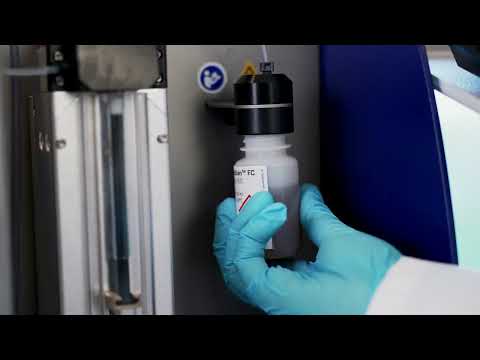
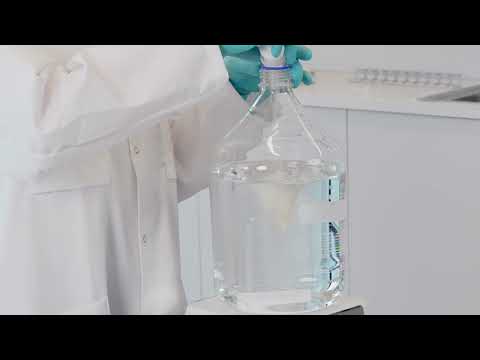
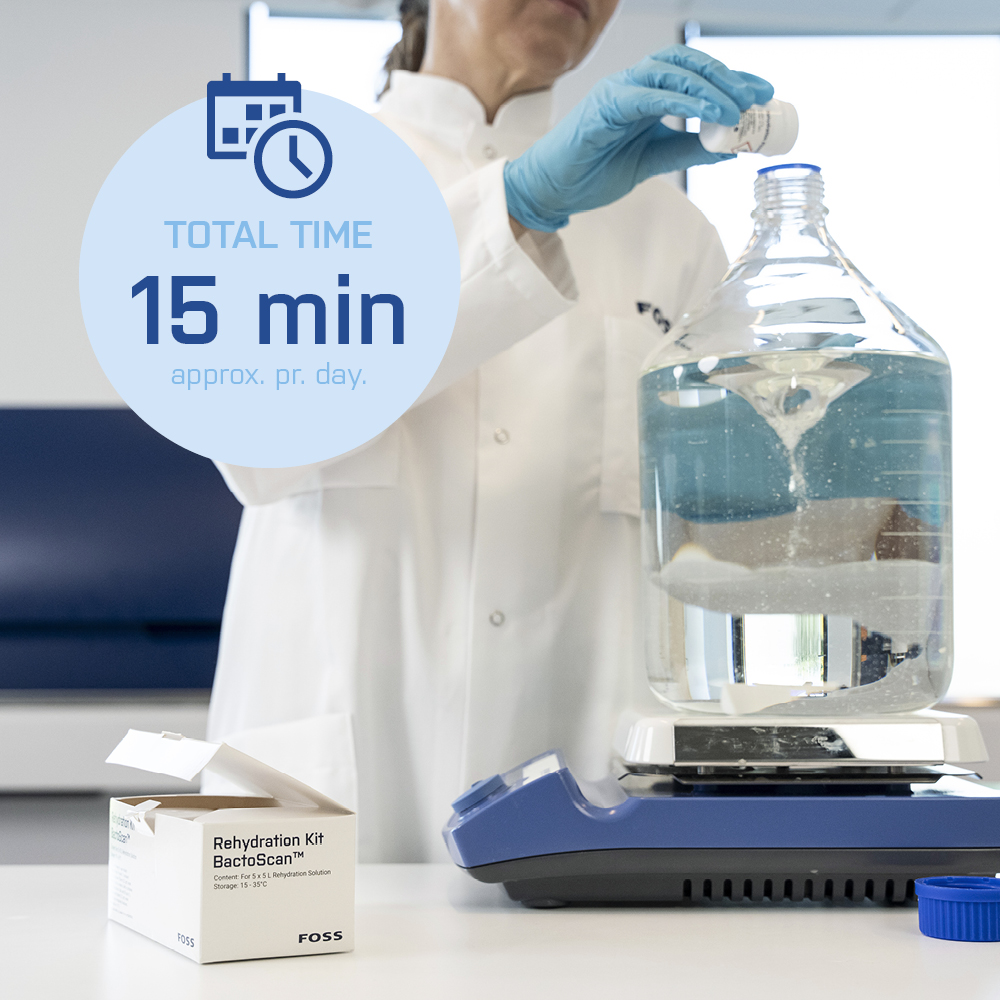
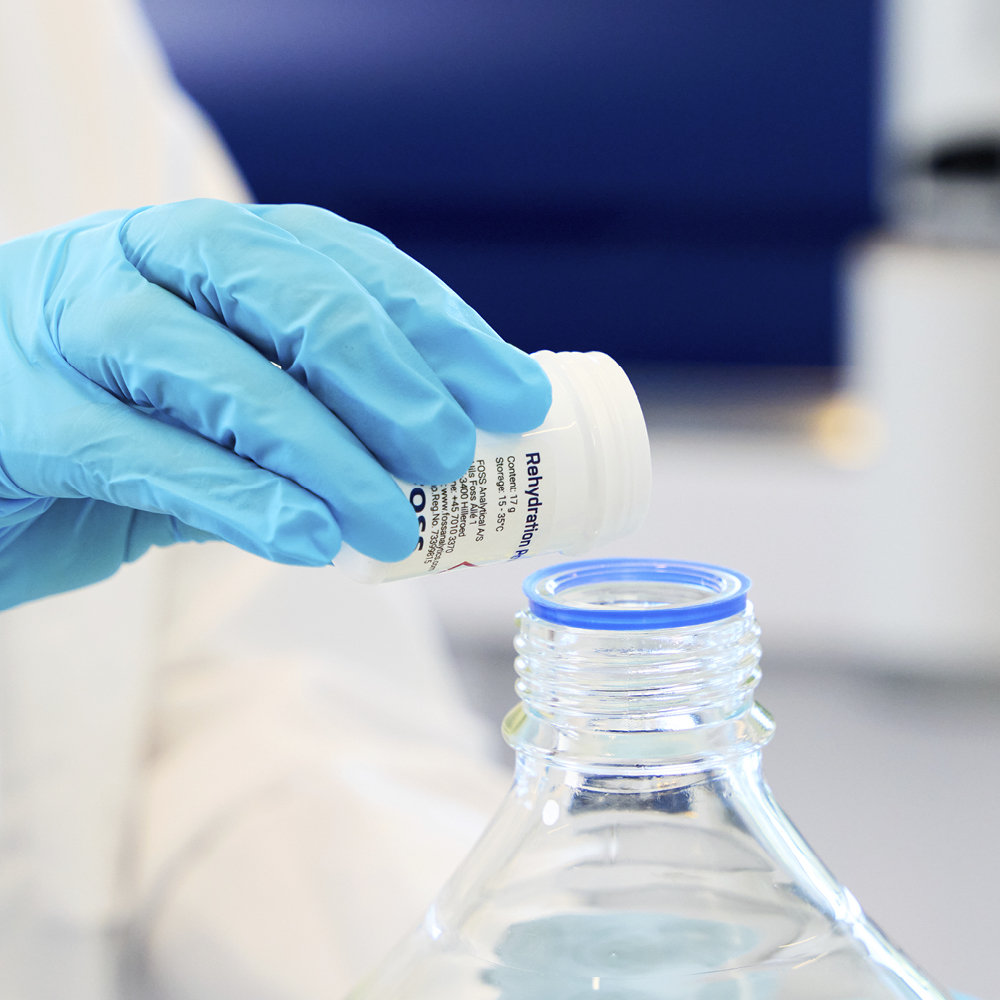
BactoScan 5 introduces a simplified reagent concept that significantly reduces preparation steps,
such as mixing rinse and sheath solutions, rehydration solutions and enzymes, to a minimum. Ready to
use reagent kits speed up the preparation phase, ensuring simple, fast and safe mixing of
reagents.
Free up operators to do other tasks
Increase safety thanks to reduced handling of hazardous reagents
Reduced operator error removes the risk of contamination
Low reagent consumption and low waste for environmental protection
Lower reagent costs per sample
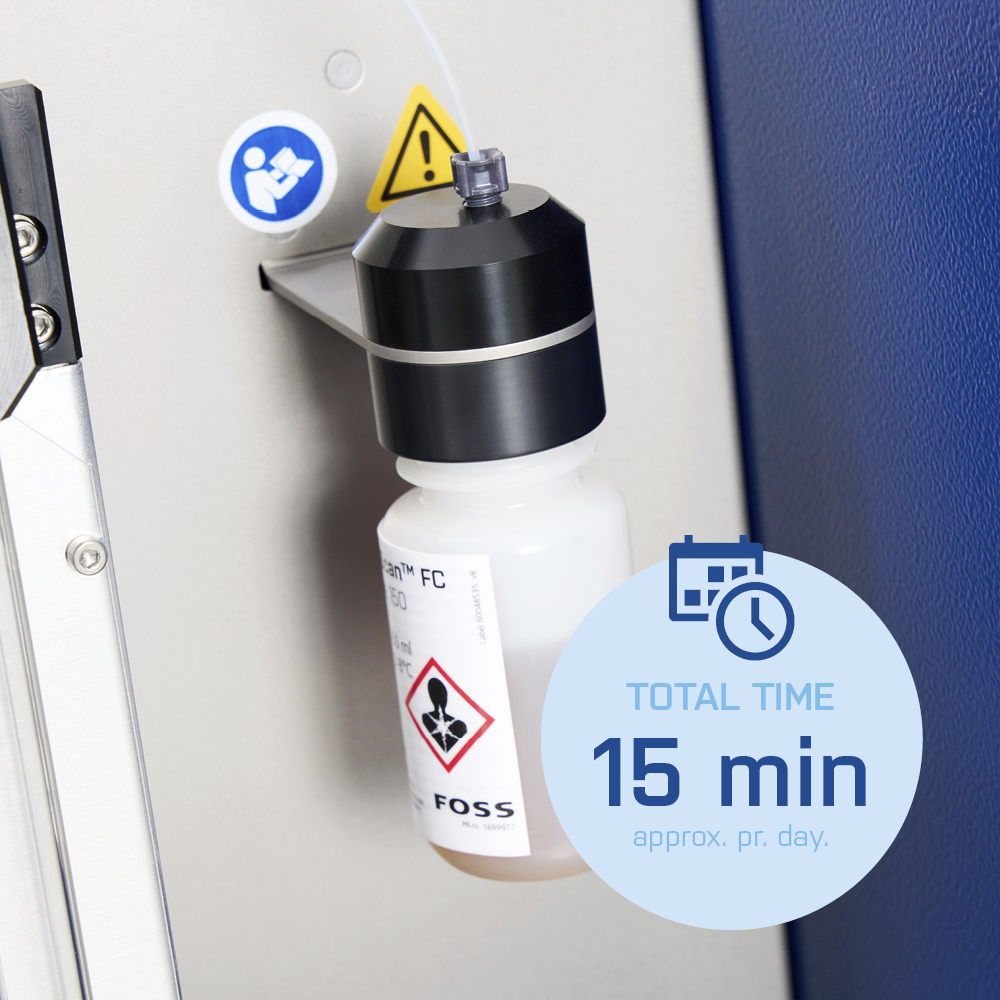
Automatic enzyme dosing
With BactoScan 5, operators no longer need to calculate the expected daily use of reagents thanks to
automatic dosing of staining solution (dye) and enzyme. This automated process minimizes handling
and mixing steps, streamlining daily operations, saving operator time, and making staff onboarding
faster and easier.
Innovation that meets your sustainability goals
The BactoScan 5 reagent concept reduces reagent use by 15-20%.
No use of reagents during standby mode.
Reduced amount of rinse/sheath during analysis.
Less waste thanks to automatic enzyme dosing and rehydration kit providing one reagent for 3
control samples.
Eliminate use of harsh chemicals such as boric acid for safer and more sustainable operations.
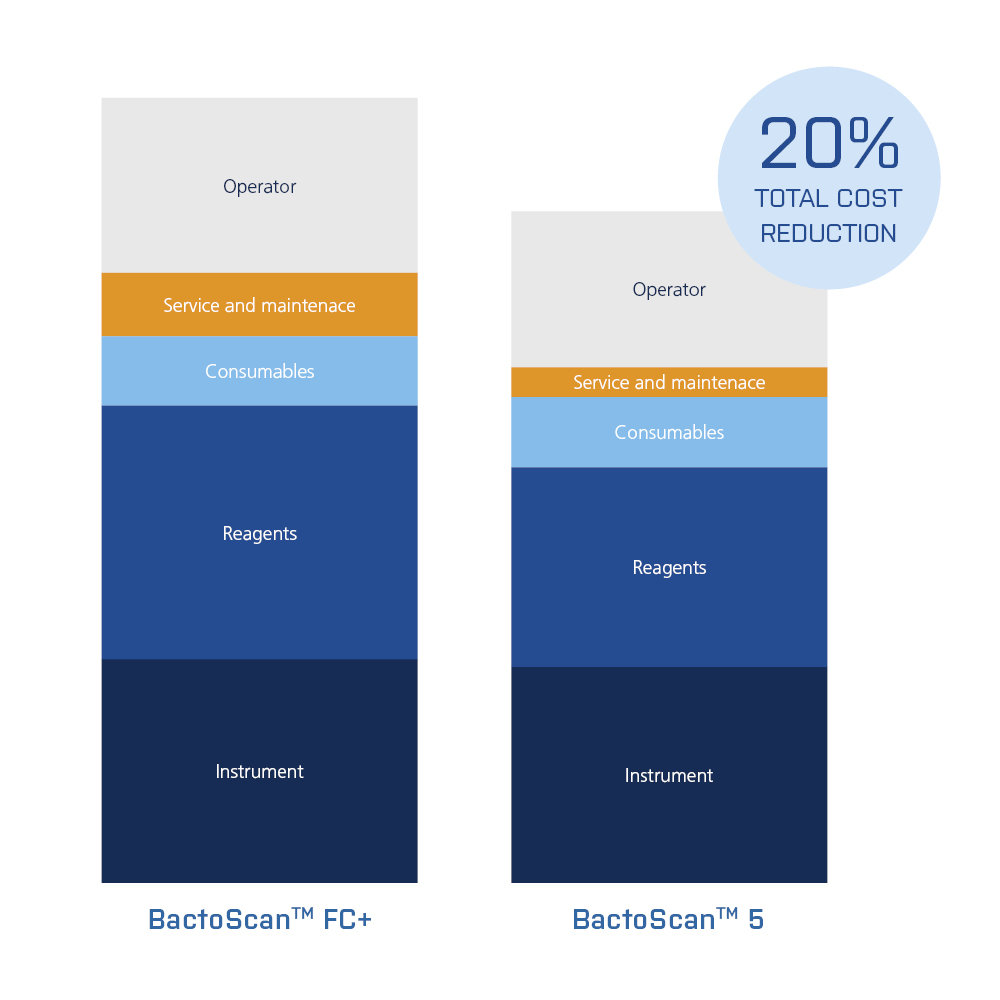
Lower your cost of ownership
Upgrading to BactoScan 5 means significant savings due to the reduced use of reagents and reduced
operator time. At the same time increased efficiency and uptime means that you can increase your
throughput and ensure maximum profit from your operations.
Typical Sy,x<0.25 log10 units in the entire measuring range
Reference or anchor method:
Standard Plate Count (SPC) CFU/ml**. ISO 21187 | IDF 196: 2021;
ISO 4833-1:2013 and ISO 16297 I IDF 161: 2020
Application data
Analysis time
9 minutes (to the first analysis result)
Sample intake
approx. 4.5 ml
Sample temperature during analysis
2-4 °C - non preserved raw milk samples
2-42 °C - Azidiol preserved raw milk samples
Sample quality
Raw milk of normal composition and good quality. Unpreserved or preserved with azidiol
Instrument management
Networking software
IQX™
*Defined by limit of detection.
**IBC can be used as an alternative method to the IDF 100B: 1991 and AOAC 986.33 reference
methods for the rapid and accurate determination of the hygienic quality of cow, sheep, goat and
buffalo raw milk for payment purposes.
PE "Labtek" (EDRPOU 31605497) is an engineering company — the exclusive representative in Ukraine of FOSS, D.V. SRL DEPURATION VEHICULER, Bitzer Wiegetechnik GmbH.
+
We provide installation, training and adjustment of equipment together with the sales representative of Altima Plus LLC (EDRPOU 36679029).